.png)
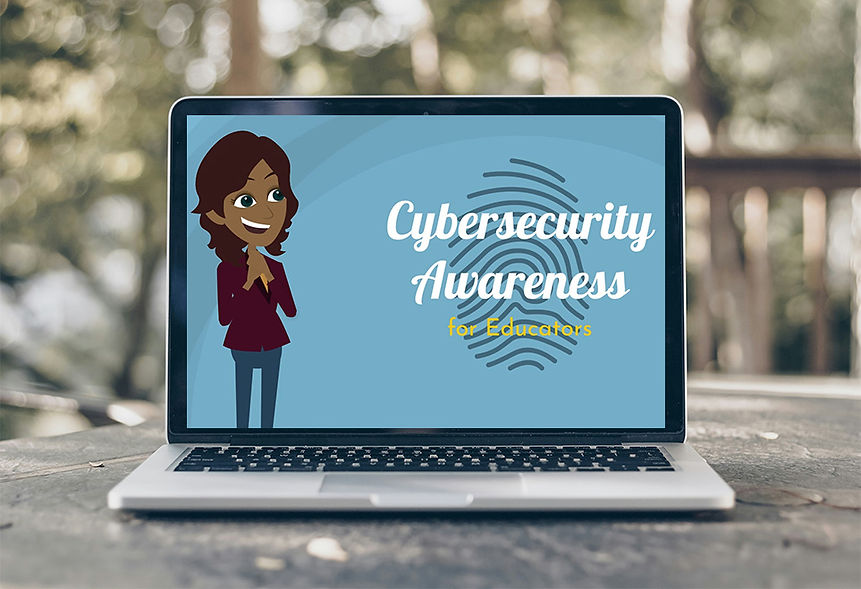
Cybersecurity Awareness for Educators
eLearning Course
Tools Used:
To create this eLearning course, I used:
-
Articulate Storyline
-
Vyond
Context
Each year, 60 employees were required to complete a county-mandated compliance training. Although completion rates were high, the learning experience was passive, content-heavy, and lecture-based.
Staff feedback revealed:
-
Low engagement during training sessions
-
Difficulty retaining information
-
Cognitive overload due to dense content delivery
-
Limited connection to real workplace scenarios
A staff survey showed that only 30% of employees felt engaged during the training. Additionally, employees reported feeling unprepared to confidently apply security procedures in real-world situations.
The performance gap was engagement, retention, and behavioral application.
Analysis
To better understand the issue, I conducted a needs assessment that included:
-
Staff perception surveys
-
Informal interviews
-
Review of course structure and delivery format
-
Consultation with the school’s IT coordinator
Key Findings:
-
Overreliance on text-heavy slides and lecture delivery
-
Limited opportunities for interaction or application
-
High intrinsic cognitive load due to dense information
-
Minimal reinforcement after course completion
Solution
I partnered with the school’s IT coordinator to redesign the compliance training experience using adult learning principles and cognitive load theory.
Instructional Improvements Included:
-
Visual supports to reduce cognitive overload
-
Narration to segment and clarify key concepts
-
Scenario-based learning reflecting real security risks staff might encounter
-
Interactive knowledge checks
-
Realistic decision-making questions
-
Application-based discussion prompts
The redesigned course shifted the learning experience from passive consumption to active participation. The focus was on relevance, clarity, and immediate workplace application.
Impact
Two weeks after implementation, staff were evaluated through follow-up surveys, guided discussions, and self-reflection prompts.
Measurable Outcomes:
-
Employee engagement increased from 30% to 80%
-
80% of staff reported improved retention of key compliance procedures
-
Staff reported increased confidence when applying cybersecurity measures
-
The number of cyberattack-related reports and preventable security incidents decreased
-
IT coordinator reported fewer repeated clarification requests
Organizational Impact
The redesigned compliance course improved not only learner engagement but also behavioral application and workplace performance. By reducing cognitive overload and incorporating scenario-based learning, the training resulted in measurable improvements at both the individual and organizational levels (Kirkpatrick Levels 2–4).